I help organisations grow through process improvement, positive change, and managing knowledge.
“The secret of change is to focus all of your energy not on fighting the old, but on building the new.”
Socrates
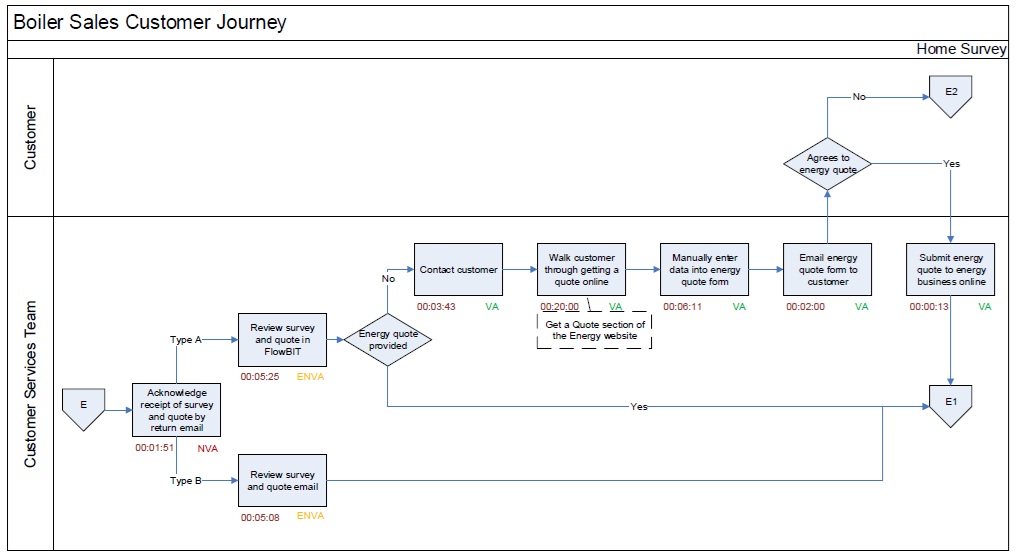
Part of an order to cash process · The analysis shows Value-adding and non-value-adding activities. · Process times facilitate both Process Cycle Efficiency (PCE) and Process Data Mining.
Business Transformation · I have been fortunate to play a leading role in 3 business transformation initiatives.
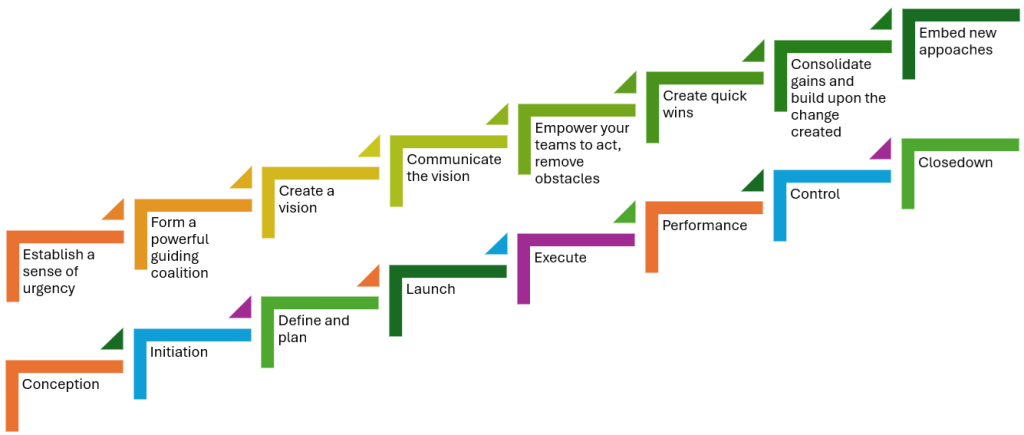
Infusing respected change management methodologies and project management methodologies ensures drive communication and empowerment of embedded change;
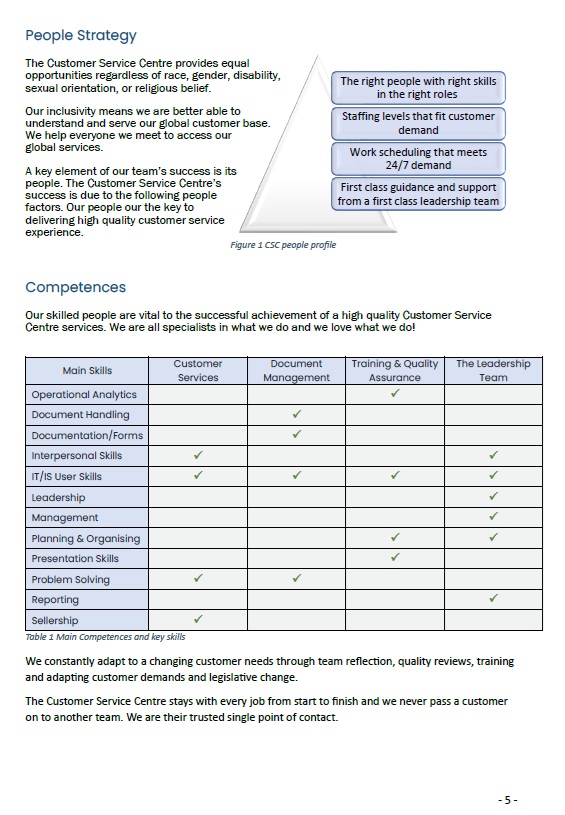
Business documents · An ISTC approved certificate in Technical Writing is useful for authoring reports and business documentation. · The styling for the original is aligned by the company style guide. · This department overview would be used internally and externally to showcase the services provided to the customer and the benefit to the business from its world-wide operations.
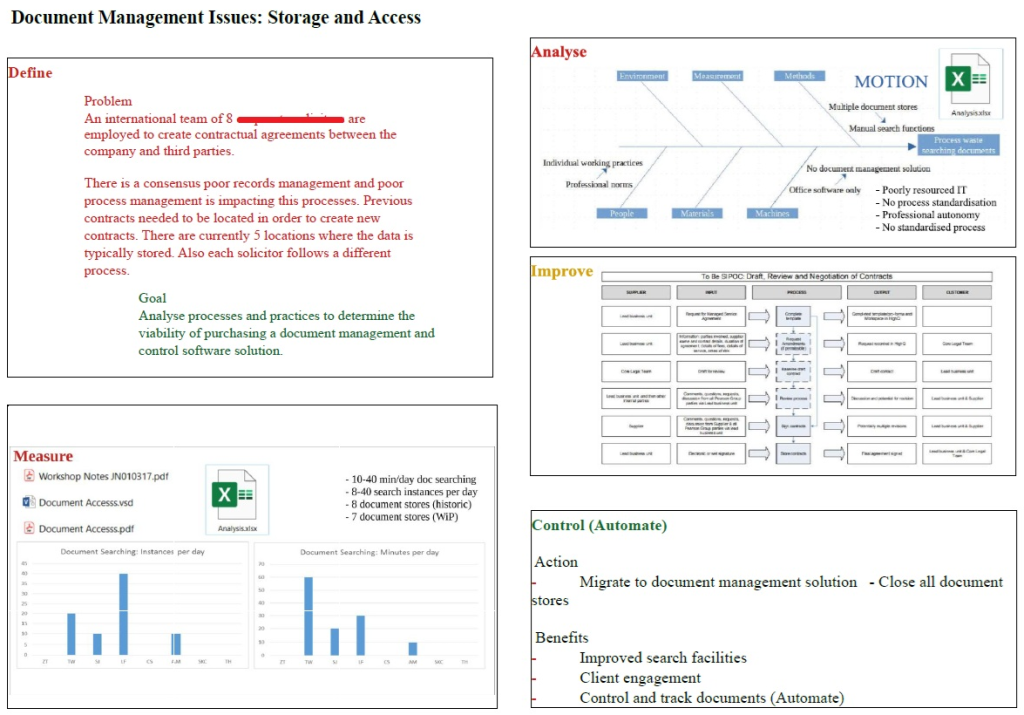
Process driven change The work of this international team was very document centric. The final report recommended: · Migration to a document management and control system. · Closure of all existing document depositories world-wide. · There would likely be impacts on team dynamics and this was highlighted in the final report of the analysis phase.
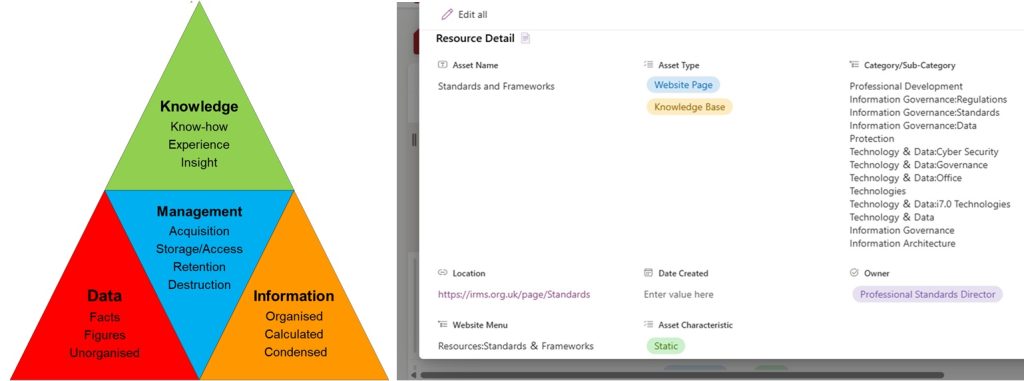
Information and Knowledge Management Combined with the related disciplines of Technical Writing and Content Management. · I am pleased to support world-class organisations who wish to better manage their enterprise knowledge. · This example uses SharePoint apps to document and manage business documents, website content and knowledge.
Confidentiality is my primary concern. These work samples and case studies are anonymised and values are adjusted to ensure full client confidentiality.
Case Studies
Process Mapping Case Study: 300 Processes Mapped, Only 4 Needed Rework
Background An expanding retail business asked me to identify and map all business processes, there were 300 processes and sub-processes across all departments. This is how I did it and after validation less than 2% needed rework. This is how I did it!
The Task I identified 300 processes but with no central view of how the actual workflow there was siloing, error and rework.
My Approach 1. I used a people driven approach, interviews, etc. to identify the operational and business processes. 2. I was working with busy people, naturally I scheduled time with with each team. First asking the team leader for permission and their resource. 3. I used 2 discovery methods, (a) observation and walkthroughs, and (b) workshops, what we use to call brown-paper exercises. 4. Each process map had 4 components, (a) swim-lanes, (b) an extended shape set that showed process waste (motion, waiting, etc. and also printing). also, (c) metadata data about the mapping, and a RACI diagram. (d) I used Visio and and verb-noun notation for all mapping. 5. An absolute must, all processes were validated before they were entered into a process library. Of the 300, only 4 needed any rework. That’s an impressive statistic, a testament to me and the workshop teams. 6. All processes were stored in a SharePoint process library. I used the Term Store to define detailed tags, department, function, inputs and outputs… The Lists of processes included update intervals and update triggers.
Harness Your Strengths – Be Adaptable – Win the Day: An Enterprise Knowledge Perspective
Background Flexibility is a critical factor in delivering successful outcomes. For example, when a project is complex or time‑sensitive it is important to adopt a leadership style that maintains momentum and maintains clear direction. If resources are limited, and you have the expertise, help out, adopt a participative style. Being participative will alleviate resource pressures. But don’t loose the leaders’ overview. Effective leaders know when to adapt.
The Task In one particular enterprise knowledge project. The objective was to develop a comprehensive understanding of the organisation’s global products, services, and markets.
Keys to Success I was able to direct my team to discover what was happening and to tag, group and classify our findings. Here are the factors contributed to the project’s success:
During an enterprise knowledge initiative, I guided my team through the process of identifying global sales offerings and systematically tagging, grouping, and classifying them. Several factors contributed to the project’s success: Knowledge Management Expertise I drew on my experience in knowledge management to demonstrate the value of knowledge and insight above information. Leveraging Team Strengths A team member had a lot of industry experience and my direction prompted him to identify the tags we applied to the products, services and markets we identified. Value Stream Mapping Using my expertise in value stream mapping, I coached multiple process‑mappers who produced value streams that were consistent in level of detail and format. Clear Synthesis and Presentation The business analyst compiled our outputs into a clear and well‑structured management pack, which I presented to senior leadership.
Result Senior management received a consolidated, enterprise‑wide view of global products, services, and markets. This perspective not only clarified the organisation’s current global footprint but also established a baseline for future change initiatives. Centralising knowledge created a valuable asset, an insight-rich foundation that supports informed decision‑making and long‑term planning.